
Palm Beach Most Wanted Explained
Palm Beach County's official photographed wanted list comes from the PBSO Fugitive Warrants Unit. The page holds a modest number of named entries. Updates are episodic, not on a strict schedule. Some notices carry old wanted dates even when page-maintenance timestamps change, so the date on a notice is not a signal of fresh activity. The sheriff's page itself is the current reference. Photographs stay on that official source and are not reproduced here as individual booking images.
Each notice asks the public for help locating a person. The listed offense, wanted date, and image should all be confirmed with PBSO before anyone repeats them. Warrants can be recalled, served, corrected, or changed by later court events. The PBSO Fugitive Most Wanted page shows the form and context of the sheriff's list.
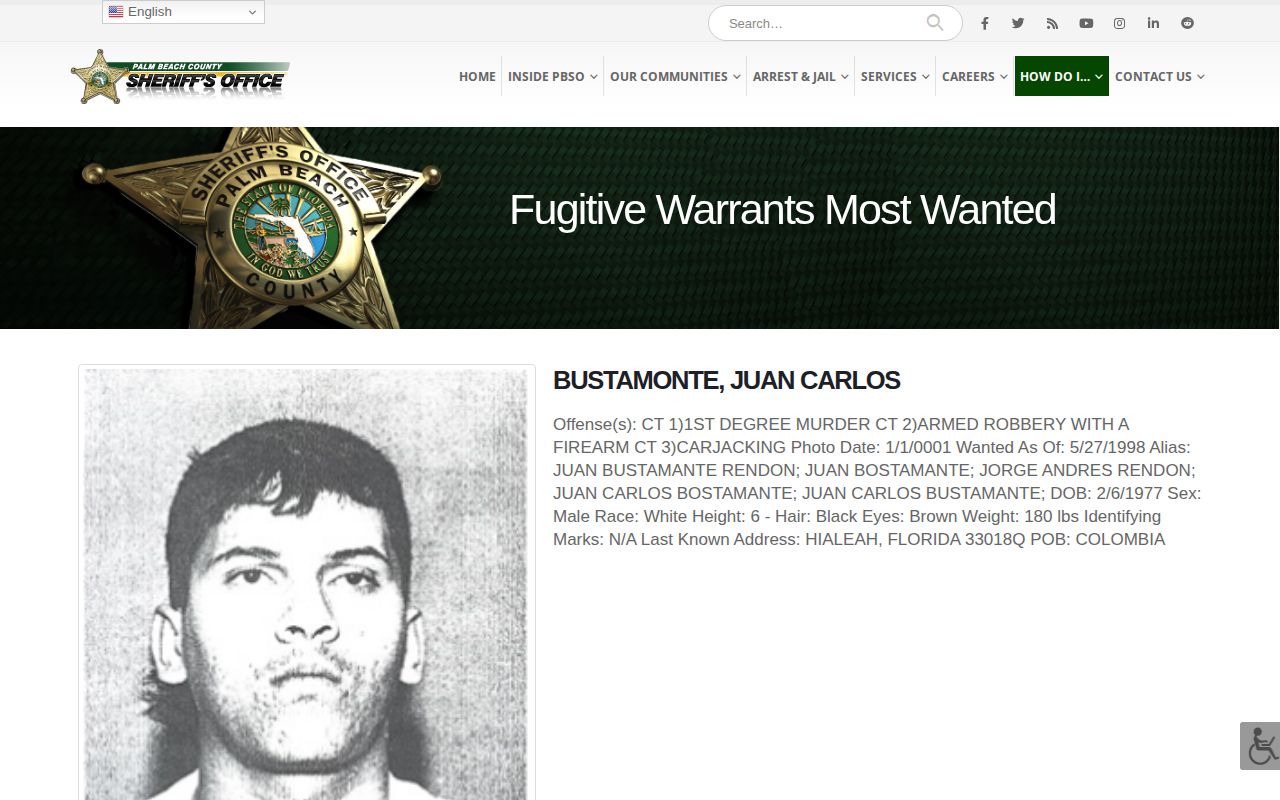
Each wanted photograph on the official page sits beside identifying and warrant details. That pairing makes the source far more useful than an image detached from its notice.
Palm Beach Wanted Listing Fields
A Palm Beach County wanted entry pairs the asserted warrant reason with facts that help tell people apart. Names alone are weak identifiers. Two people can share a name. That is why aliases, birth dates, physical details, and dates matter. A photograph adds another clue, but it can be old. Never lean on a photo as the sole means of identification.
| Field | What the PBSO listing may show |
|---|---|
| Name and aliases | The primary listed name and any other names tied to the wanted notice. |
| Wanted reason | The alleged offense or other stated basis for the notice, not a conviction. |
| Key dates | The photo date and the date the person was listed as wanted. |
| Identity details | Date of birth, sex, race, height, weight, hair, eyes, and identifying marks where supplied. |
| Location details | Last known address and place of birth, which may be old or incomplete. |
A "last known" address is history, not a direction to visit that place. The same caution applies to an old photo or an alias. Confirm any possible match through law enforcement. Do not confront or follow anyone.
Use Palm Beach Wanted Listings
Stay grounded in the source. Open the official PBSO page and read the whole current notice before you act. Route any credible location tip through an approved channel only. Toss the saved screenshot from last month, too. Wanted status shifts fast once someone is caught or booked, long before any repost catches up.
- Open the official PBSO wanted page and confirm that the notice is still displayed.
- Compare several listed details, not a face or name alone, without approaching the person.
- For an immediate threat, call 911. For a non-emergency tip, use PBSO or anonymous Crime Stoppers.
- After a reported capture, check the Palm Beach County booking and custody search by name and date. A blank result may reflect intake lag or a different custody path.
PBSO booking staff the county intake desk around the clock. That does not promise minute-by-minute updates online. Someone detained an hour ago may not show up yet. A name in the blotter can also vanish later, since releases and transfers happen. Keep the two tools straight. The wanted page tells you who deputies are hunting; the booking record tells you whether a county arrest has been published.
Note: Never go to a listed address, try to detain anyone, or post an unverified location; send what you know through the proper tip channel.
Palm Beach List Versus Warrants
Scale is the fact that matters most here. PBSO reports tens of thousands of active warrants held by its Warrants Division. The photographed Most Wanted page carries just 17 entries. That gap tells you the page is a curated public appeal, not a searchable inventory. Missing from it only means a person was left out of that small featured set.
Behind the scenes, the Warrants Division does the heavy lifting. It processes, stores, validates, and executes warrants issued through the Palm Beach County court system. It also feeds warrant data into local systems, the Florida Crime Information Center, and the National Crime Information Center. Not every traffic or misdemeanor warrant reaches those state and national files, PBSO notes. A broad national database check can therefore miss something purely local.
For that distinction and the official contact route, the PBSO Fugitive Warrants Unit page is the source to trust.
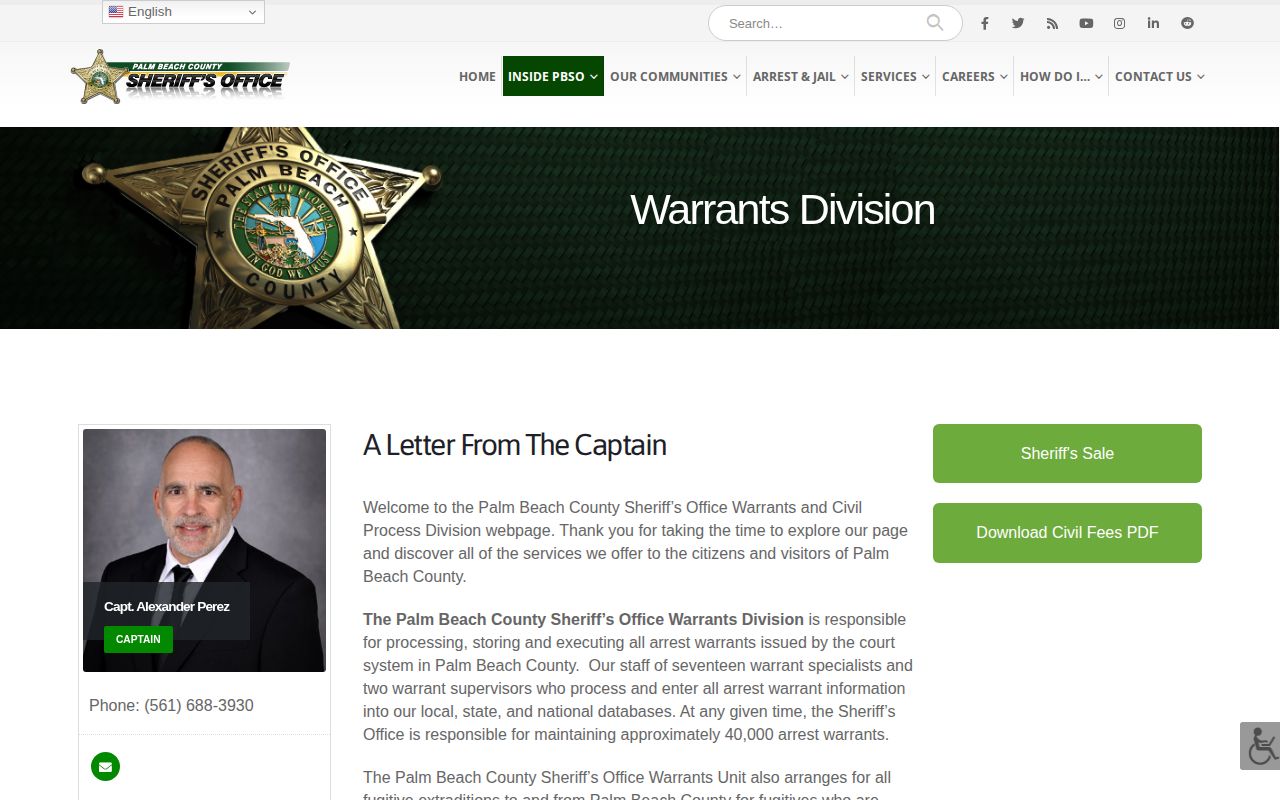
No complete public warrant-query portal exists for Palm Beach County. When a name turns up empty on Most Wanted, the Fugitive Warrants Unit page is the right place to turn next.
Palm Beach Warrant Check Steps
Start with the case you know about, if there is one. Then end with advice from an official source. The Clerk's docket and the sheriff's office answer different questions. A filed case can show a warrant event in the docket, while PBSO handles warrant processing and can walk you through its official inquiry route. A blank web entry proves nothing. An old screenshot proves nothing either.
- Search the known Palm Beach County case in Clerk eCaseView. Match the name with case number, arrest date, or other case facts.
- Read the docket event and case status carefully. A filing may lag, and a warrant event can later be recalled, served, or changed.
- Call the PBSO Warrants Division at 561-688-3930 for official guidance when current status is uncertain.
- If the matter may affect the caller personally, contact a Florida attorney or the issuing court and follow lawful resolution or surrender instructions.
Leave news archives, social accounts, and commercial search pages out of it. None of them control the warrant. A clerk record won't locate a person in custody, either. If a warrant has already led to a county arrest, the PBSO booking record is where the separate custody facts live.
Note: A “no result” screen is not clearance; spelling errors, access limits, a new filing, or a local warrant outside a broad database could all explain it.
Palm Beach Warrant Types
Warrant is a broad label. In Palm Beach County it can point to several different court orders. The details matter more than the word itself. Bond terms, docket entries, and the correct legal next step all flow from the specific issuing case. A charge headline alone won't tell you which type applies. For the real answer, ask the Palm Beach County Clerk or a lawyer who can pull the order and explain it.
| Record label | What to verify | Best official route |
|---|---|---|
| Arrest warrant | The issuing case, alleged basis, service status, and any bond shown in the court or sheriff record. | PBSO Warrants Division and the issuing court. |
| Bench warrant or capias | The court event that caused the order and whether a later docket entry changed it. | Clerk eCaseView, the court, or counsel. |
| Traffic or misdemeanor warrant | Local status, since PBSO warns some are not validated into FCIC or NCIC. | PBSO Warrants Division and the relevant Clerk case. |
| Most Wanted notice | Whether PBSO still displays the selected public appeal. | The official PBSO wanted page. |
Here's the key distinction. A warrant is an order backed by a court. Most Wanted is simply a publication choice by the sheriff's office. The two often overlap, since many people on a Most Wanted list do have active warrants, but one does not create the other. To learn where a Palm Beach County case stands, check the official case file or sheriff sources.
Palm Beach Warrant Tips
Know what tip lines are for. They exist to pass along information about someone PBSO is trying to find, not to clear a warrant or settle a case. Palm Beach County Crime Stoppers takes anonymous tips, while PBSO handles law-enforcement reports. Emergencies go straight to 911. If your question is about a possible warrant with your own name on it, call the Warrants Division, the court, or an attorney instead.
Palm Beach County Crime Stoppers
Anonymous tip line
1-800-458-TIPS
Use for non-emergency location information tied to a wanted appeal.
PBSO Warrants Division
Official warrant guidance
561-688-3930
Call 911 instead when there is an immediate threat.
Not every wanted entry in Palm Beach County comes with reward money. When a reward exists, the tip program's current terms govern it. So stick to facts when you call. Say what you saw, plus the time, the place, and why it might match the official notice. From there, law enforcement decides what happens next.
Safety: Do not approach, follow, restrain, warn, or attempt to locate a listed person. Report a credible tip through PBSO, Crime Stoppers, or 911.
Palm Beach Warrant Alerts
The sheriff's official app is PBSO ConnectProtect. It pushes alerts, news, and tip tools to residents, including bulletins tied to your area. Its two-way reporting feature lets you send a suspicious-activity notice with a description, category, photo, and location. You may also spot selected wanted appeals inside the app. Just know its limits: PBSO does not present it as a full warrant search, jail roster, or booking-photo lookup.
VINE plays a different, narrower part. Reach it through the PBSO corrections information page, and it will send free, anonymous notice when someone held in a PBSO detention facility is released, transferred, or escapes. Its status line is 1-877-846-3435. VINE tracks county custody only. It won't reveal an unserved warrant, and it won't show how a court case ended.
One caution about social posts and app alerts. They are chosen communications, so they can vanish or be overtaken by later events. For a wanted-list check, the canonical PBSO wanted page controls. For a single warrant inquiry, contact the Warrants Division. The Clerk docket, meanwhile, is the place to trace the court path.
Palm Beach Warrants Reach Court
A served Palm Beach County warrant can lead to booking, first appearance, release conditions, and later docket events, but no single outcome is automatic. Florida's first-appearance rule generally requires a person who has not already been lawfully released to appear before a judicial officer within 24 hours of arrest. That hearing addresses the charge, rights, counsel, and release.
Arraignment later states the pending charge and takes a plea. Prosecutors can decline, add, reduce, or amend the booking allegation. Motions, diversion, dismissal, plea, trial, acquittal, adjudication, and sentence can all change the case's meaning. That is why the disposition, the court's recorded outcome, must be read after the wanted notice or booking entry.
A released person is no longer in that PBSO custody event, but release does not mean the case was dismissed. A person transferred to Florida state prison belongs in the Florida Department of Corrections search, while federal and immigration custody use different systems. Match the source to the custody stage, and never treat the absence of a Palm Beach County jail result as an answer to the warrant or court question.